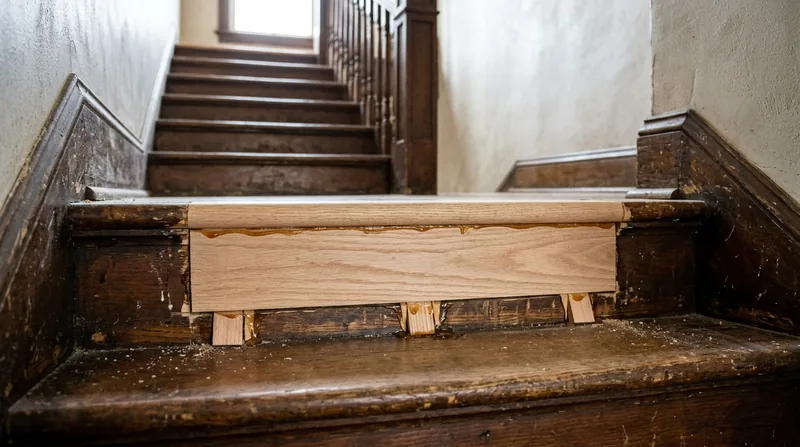




Creaking treads and wobbly railings are common in Akron's century-old homes, from the Victorian mansions on West Hill to the Tudor cottages of Goodyear Heights and the Arts and Crafts estates around Fairlawn. Ice dams, freeze-thaw cycles, and humidity from our lake-effect winters work on wood year-round, and stairs take the weight of daily use on top of that. Stair and railing repair in Akron means tightening loose stringers, reinforcing worn treads, restoring newel posts, and adding or upgrading handrails to meet current code. We rebuild what can be saved and replace what cannot, using the same carpenters on every job so the work is done right the first time.
Why Stair and Railing Safety Matters in Akron's Older Homes
Most homes in Akron were built before 1978, and many before 1920. Stairs in those houses have absorbed a century of weight, moisture, and wood movement. Seasonal humidity swings in our climate cause wood to expand and contract, loosening fasteners and opening gaps between treads and stringers. A stringer that has absorbed moisture or shows soft spots from wood rot will flex under load, and that flex translates into movement, noise, and eventually failure of the connections that hold the stair together.
- We inspect stringers, treads, risers, and all fastening points to identify loose or rotted wood before it becomes unsafe.
- We tighten treads and risers by driving new fasteners through the stringer into the tread from underneath, or by reinforcing the joint with blocking and screws.
- We replace stringers or individual treads when wood rot, dry rot, or structural damage makes repair impractical.
- We rebuild or upgrade railings and newel posts to meet current code, which requires stronger baluster spacing and grab rail placement than many older homes have.
Code requirements for stair railings have tightened over the years, and a railing that was legal in 1950 may not pass inspection today. We bring older stairs into compliance without removing the period character of the home.
Key info: A sagging or creaking staircase in a West Hill Victorian or a Goodyear Heights cottage is often a sign that the stringer is moving. Moisture, fastener failure, and wood deterioration compound over decades. Tightening and reinforcing now prevents a much costlier replacement later.
For more on wood damage from moisture and seasonal movement, see our page on wood rot and dry rot repair.
How We Repair and Rebuild Stairs in Akron
Our process starts with a detailed inspection of the entire stair assembly. We check the stringer for soft wood, rot, and movement. We test every tread for flex and listen for creaks that tell us where fasteners have failed. We measure railing height, baluster spacing, and handrail grip diameter against current code. Then we propose repair or replacement based on what the wood can support and what the customer needs.
- We remove loose fasteners and replace them with new screws or bolts driven from underneath the stringer to tighten the joint.
- We reinforce weak stringer-to-tread connections by installing blocking and additional fasteners to distribute load across a wider area.
- We splice or sister a stringer when rot is localized and the rest of the wood is sound, adding a new piece of dimension lumber alongside the damaged section.
- We replace stringers, treads, or entire stair runs when wood damage is too extensive to repair cost-effectively.
- We rebuild or install new railings and balusters to code, using wood species that match the home when possible, and adding or upgrading handrails for safety and accessibility.
Every repair is tested before we consider the job complete. A tightened stair should have zero movement and zero creaks under normal use.
Local example: A 1920s Colonial Revival home in Fairlawn had a basement staircase with a stringer that had absorbed moisture from a damp crawl space. The wood was soft in the lower 18 inches. We sistered a new pressure-treated 2x10 to the damaged section, bolted it through with lag screws, and tightened all the treads. The stairs are now solid and will last another 50 years. The original character of the staircase was preserved.
Related work on structural carpentry can be found on our framing and structural carpentry page.
Stair Repair Methods and When to Use Each
| Approach | Description | Best for |
|---|---|---|
| Tightening and re-fastening | Remove old fasteners and install new screws or bolts from underneath the stringer into the tread, creating a tight joint with no movement. | Loose treads and risers with sound wood and no rot; creaking stairs caused by fastener failure rather than wood damage. |
| Stringer reinforcement | Install additional blocking or a sister board alongside a weakened section of the stringer to distribute load and restore strength. | Localized rot or softening in a stringer; structural weakness that does not warrant full replacement; cost-sensitive repairs. |
| Tread or riser replacement | Remove and replace individual treads or risers without disturbing the stringer, using matching wood species where possible. | Surface damage, splits, or rot in treads or risers; when the stringer is sound and only the wearing surface needs renewal. |
| Stringer replacement | Remove and rebuild the entire stringer assembly with new dimension lumber, preserving or rebuilding railings and baluster connections to match the original. | Extensive rot, structural failure, or code upgrades requiring new handrail or baluster spacing; when repair is not cost-effective. |
| Railing and baluster upgrade | Install new balusters with correct spacing, upgrade handrails, or rebuild newel posts to meet current code without replacing the stringer. | Older homes with railings that do not meet code; balusters spaced too far apart; missing or inadequate handrails; loose newel posts. |
Stair and Railing Repair Cost in Akron: What to Expect
Stair and railing repair in Akron typically starts at $600 for straightforward tightening and re-fastening of a short flight. The cost depends on the extent of damage, the length and complexity of the staircase, whether the stringer or treads need replacement, and whether code upgrades to railings are required. A full stringer replacement or a two-story staircase with new railings can run significantly higher. Access, the condition of the wood, and the need for matching species or period details all affect the final price.
We recommend getting 2 or 3 estimates so you can compare approaches and pricing. Some contractors may push for full replacement when repair is possible. Our philosophy is to repair sound wood and replace only what is truly damaged. That approach usually saves money and preserves the character of older homes.
For a detailed breakdown of pricing across all our services, visit our full pricing page. Call us at (234) 231-8373 for a free, no-obligation estimate on your stairs.
What to Look for When Hiring a Stair and Railing Repair Contractor Near Akron
Stair repair is a structural matter, not a cosmetic one. A poorly done repair can create a safety hazard. When you are comparing contractors, ask about their approach to diagnosis. Do they explain what is wrong and why, or do they jump straight to replacement? Ask for references from recent stair or railing jobs. Check that the contractor is fully insured and can document coverage. Ask whether permits are required for your specific job and who will handle that paperwork.
- Verify that the contractor is fully insured and can provide a certificate of insurance on request.
- Ask for references from at least two recent stair or railing repair jobs in Akron, Cuyahoga Falls, Stow, or nearby communities.
- Confirm whether your job requires a permit from the local building department and whether the contractor will obtain it or help you apply.
- Request a written estimate that describes the repair method, materials, timeline, and any code upgrades to railings or handrails.
- Ask whether the same crew will do the work from start to finish, not subcontractors rotating in and out.
Stair and railing work that alters the structure or changes code compliance may require a permit. Rules vary by municipality, so confirm with your local building department in Akron or your city before work begins. We can help you understand what is needed and support the permit process.
Ready to get started? Contact us for a free estimate. We respond within 24 hours and can discuss your staircase, show you repair options, and answer questions about cost and timeline.
Stair & Railing Repair in Akron: Pricing Guide
| Service | Price | Details |
|---|---|---|
| Tightening and re-fastening | Starting at $600 | Loose treads, creaking stairs, and fastener replacement on sound wood with no structural damage. |
| Stringer reinforcement or sistering | Starting at $1,200 | Localized rot repair, blocking installation, and reinforcement of a weakened stringer section. |
| Tread or riser replacement | Starting at $400 per tread | Individual tread or riser removal and replacement with matching wood species where the stringer is sound. |
| Full stringer replacement or railing upgrade | On estimate | Extensive rot, full stringer rebuild, code compliance work, or new railings require on-site inspection and custom pricing. |
| Travel | Included | No separate travel fee or mileage charge for Akron and surrounding service area communities. |
| Free estimate | Free | Response within 24 hours at (234) 231-8373, no obligation to book, full written quote provided. |
Indicative pricing, the exact cost depends on square footage, finish, and site access. Free personalized estimate within 24h at (234) 231-8373.


