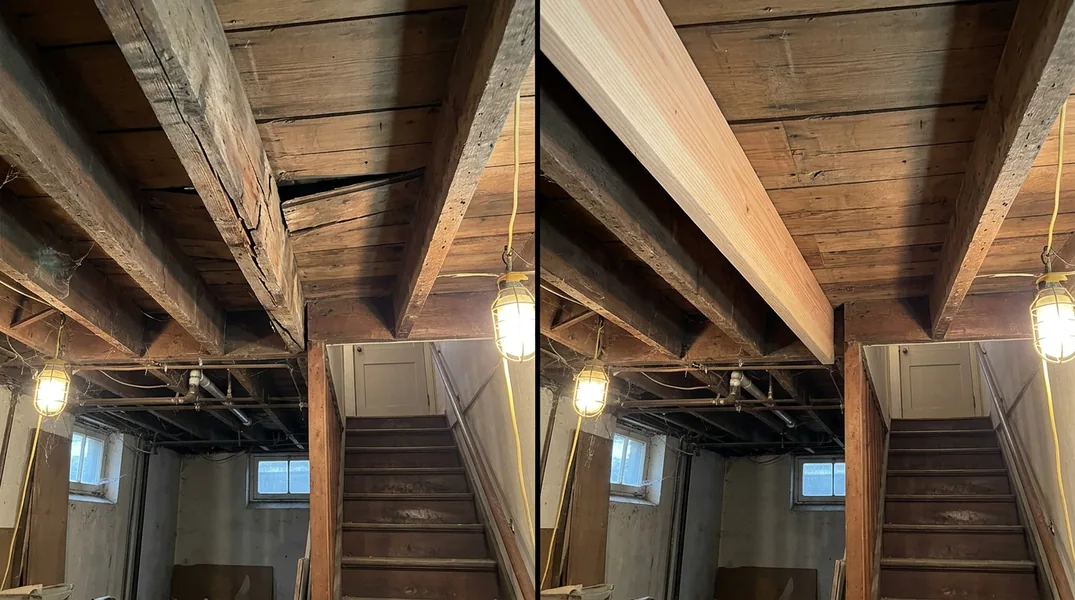
Why Is My Floor Sagging? Common Causes in Older Akron Homes
If you've noticed your hardwood floors dipping or your furniture sliding toward one side of the room, you're not alone. Sagging floors are one of the most common structural complaints we hear from homeowners in Akron, especially in homes built before the 1970s. The good news is that understanding what causes the problem is the first step toward fixing it.
The floor beneath your feet is supported by a network of wooden beams and joists that span across your basement or crawl space. When these structural members fail, your floor sags. The culprits are usually moisture, rot, settling, or a combination of all three. Wood Rot & Dry Rot Repair is often the underlying issue, especially in older homes where moisture control was not a priority during construction. Basements that flood seasonally, crawl spaces with poor ventilation, and plumbing leaks create the perfect environment for wood to deteriorate over decades.
Another common culprit is inadequate support from the start. Many older homes in Akron were built with floor joists that are now undersized by modern standards, or they were never properly supported by a central beam. When a homeowner removes a wall or adds weight to the structure without reinforcement, the joists can begin to sag under the load. Additionally, Termite Damage Repair may be necessary if the wood has been compromised by pest activity, which weakens the structural integrity just as severely as rot.
Understanding Floor Joist Repair and Sistering Floor Joists
Once we've identified that your joists are damaged or failing, the repair strategy depends on the severity of the problem. Floor Joist & Subfloor Repair can range from simple reinforcement to complete replacement, and the method we choose will depend on what we find during inspection.
One of the most effective and cost-efficient solutions is a technique called sistering floor joists. Sistering involves bolting a new, pressure-treated joist alongside the damaged or weakened existing joist. This doubles the support in that section of the floor and is particularly useful when the original joist is still structurally sound but has lost some capacity due to rot, settling, or age. The new sister joist is secured with lag bolts every 16 to 24 inches along its length, creating a unified beam that shares the load. This method avoids the need to lift the entire floor or disturb the subfloor and flooring above, making it both practical and less invasive than a full replacement.
In cases where the joist is severely compromised or has lost more than 30 percent of its cross-sectional area to rot, we may recommend full replacement of that section. This requires temporary support posts to be installed, the damaged joist to be carefully removed, and a new pressure-treated joist cut to fit and secured in place. The process is more involved but ensures that the structural failure is completely resolved and won't recur in that location.
Sagging Floor Repair Cost in Akron: What to Budget
The cost of repairing a sagging floor varies dramatically based on the extent of the damage, the number of joists affected, and the repair method required. Understanding the factors that drive pricing will help you make an informed decision about your repair investment.
A simple sistering job on one or two joists in an accessible basement might cost between $800 and $2,500, depending on the length of the joists and how easy they are to reach. If multiple joists need repair, or if the damage is spread across a large area, costs climb quickly. A more extensive repair involving four to six joists could run $3,500 to $8,000. Full joist replacement, especially if it requires temporary support structures and involves removing and disposing of rotted wood, typically ranges from $2,000 to $6,000 per joist, plus labor.
If the sagging is caused by a failing central beam or inadequate support, you may need Beam Replacement & Load-Bearing Wall Removal, which is a more complex project that can cost $5,000 to $25,000 or more depending on the span and the structural demands. The good news is that you don't have to guess. We recommend getting a professional inspection and free estimate before committing to any work. Call Akron Carpentry at (234) 231-8373 to schedule yours.
How to Know If Your Floor Needs Immediate Attention
Not all sagging floors require emergency repairs, but some do. If you're noticing a subtle dip in one room, you may have time to plan and budget for the work. However, if the sagging is severe, if you hear creaking or cracking sounds when you walk across the floor, or if doors and windows in the affected area are sticking or won't close properly, the structural damage is likely progressing and should be addressed sooner rather than later.
A floor that sags more than 1 to 2 inches over a 20-foot span is considered significant and warrants professional evaluation. If the sag is accompanied by visible mold, a musty smell, or evidence of active moisture, the underlying rot is probably still advancing. In these cases, delaying repair can lead to catastrophic failure and much higher costs down the road. The wood continues to deteriorate, the load-bearing capacity decreases, and the risk of injury increases. Additionally, if you're selling your home, a sagging floor will be flagged during inspection and will significantly impact the sale price and buyer confidence.
The Inspection Process: What Professionals Look For
When a professional carpenter inspects a sagging floor, they're looking for several key indicators of structural failure. We start by measuring the extent of the sag using a level and straightedge, documenting how much the floor has dropped from its original plane. We then examine the joists themselves, checking for soft spots, discoloration, visible rot, or pest damage. We also assess the moisture environment, checking for signs of water intrusion, poor ventilation, or active leaks.
We'll inspect the support system, including any beams, posts, or piers that carry the load. Often, we discover that support posts are resting on dirt or concrete without proper footings, or that they've settled unevenly over time. We'll also look at the rim joists and band boards around the perimeter, as these are common entry points for moisture and pests. Finally, we assess the subfloor and any flooring above to determine if additional repairs will be needed once the structural work is complete.
This thorough evaluation allows us to create a repair plan that addresses not just the symptom (the sag) but the underlying cause (the rot, settling, or inadequate support). That's why we always recommend starting with a professional inspection before making any decisions. If you're in Akron and concerned about your floors, contact us today at (234) 231-8373 for a detailed assessment.
Preventing Future Floor Damage: Moisture Control and Maintenance
Once your floor has been repaired, protecting it from future damage is essential. The most important factor is controlling moisture in your basement or crawl space. If water is getting in, it will eventually rot the wood again, no matter how well the repair was done. This means installing proper gutters and downspouts, grading the soil away from your foundation, and ensuring that your basement or crawl space is properly ventilated and dry.
If you have a crawl space, consider installing a vapor barrier on the ground and ensuring adequate ventilation or, in some cases, installing a dehumidifier. If your basement is prone to flooding or high moisture, a sump pump and drainage system may be necessary. These preventive measures are far less expensive than dealing with recurring rot and structural failure. Regular inspections of your basement or crawl space, especially after heavy rains or seasonal changes, can catch problems early before they compromise your floor system. By staying proactive about moisture and maintenance, you can protect your investment and avoid the stress and expense of major repairs in the future.
Looking for a professional carpentry contractor in Akron? Akron Carpentry responds fast for all your carpentry needs.
Get a Free QuoteOur services: Wood Rot & Dry Rot Repair · Termite Damage Repair · Floor Joist & Subfloor Repair